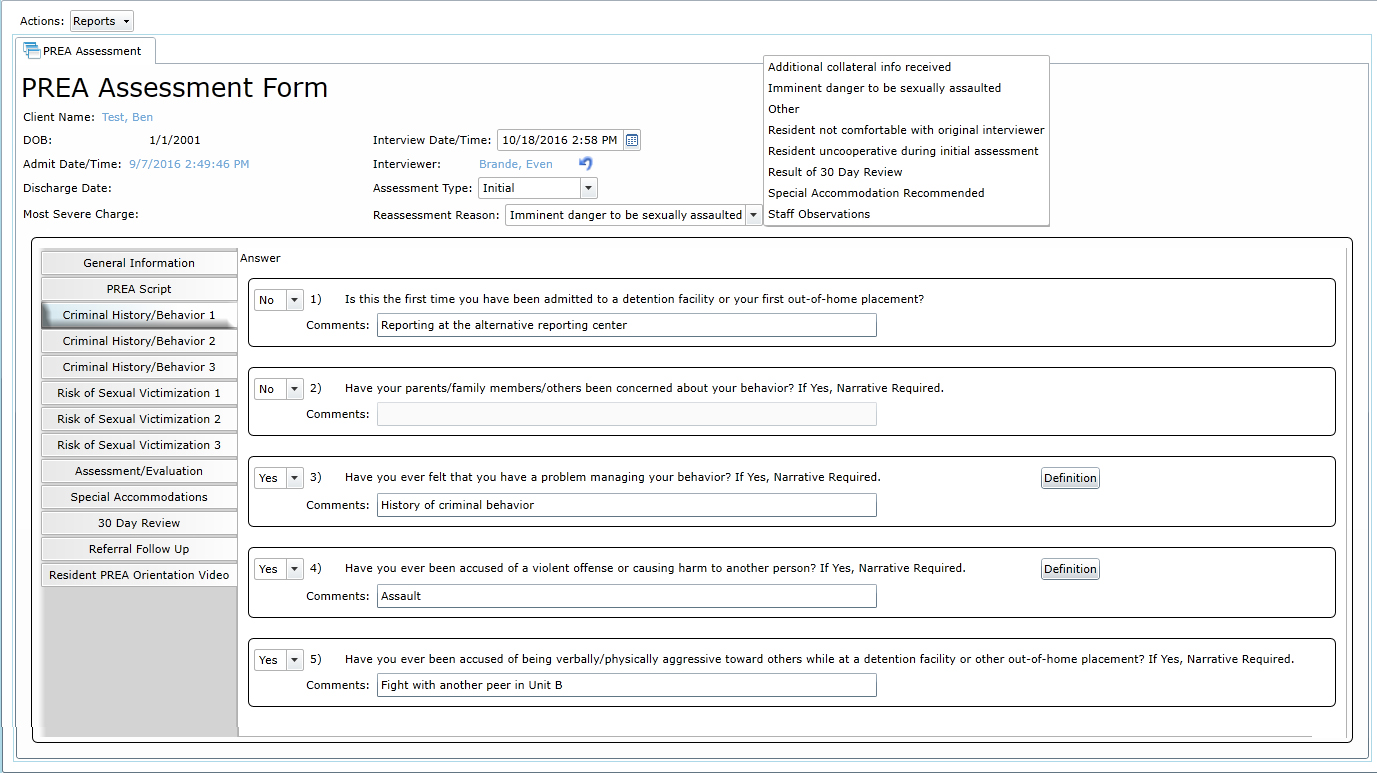

The Prison Rape Elimination Act (PREA) passed in 2003 was to provide for the research and analysis of the incidents of prison rape. While this is focused mostly on the adult corrections system, PREA also is monitored in juvenile detention facilities as well.
Handel has worked closely with our customers to build implementations for juvenile facilities to manage the complexities of PREA standards. Whether your facility is beginning to incorporate these tracking standards or is overwhelmed by the intricacies or find they have become burdensome, register to watch this recording exploring a RiteTrack implementation that incorporated PREA seamlessly.
PREA standards require the use of risk assessments, PREA-related questions (e.g., sexual orientation, gender identification, etc.), agency documentation, and reporting to reach the outlined goals in the initiative.

During this recording, we will demonstrate those features in RiteTrack plus the following:
Handel has implemented RiteTrack software in numerous juvenile facilities, juvenile detention and juvenile treatment facilities. Register and watch this recording to see how RiteTrack assists facilities in the day-to-day operations as well as incorporating required PREA standards.
My personal introduction to Handel IT and the RiteTrack software system (see my previous blog) was in no small part due to the topic of seclusion. While the topic of seclusion and room confinement is bigger than RiteTrack software, seclusion has become a big issue for juvenile and adult facilities in Ohio and across the country.
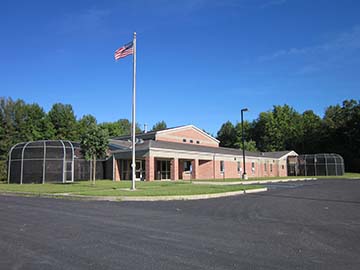
Perry Multi-County Juvenile Facility in New Lexington, Ohio
As the former director of the Perry Multi-CountyJuvenile Facility, I served a mandate to provide rehabilitation to juveniles in a correctional setting, rather than a punitive punishment in an institutional setting. I firmly believed that seclusion, as a form of punishment, was detrimental to our philosophy of assisting and helping youth. In short, if you locked a juvenile in a room (seclusion), how would you expect him to reintegrate into a therapeutic treatment model without unintended consequences such as an unwillingness to engage in a treatment program? My belief is that seclusion, used solely as punishment, was counter to a treatment philosophy of engagement and making better choices. Although as a director, I also understand that there were times in which the only means of protecting an individual youth, my staff and the facility as a whole was seclusion. These issues of when is seclusion necessary, when is seclusion needed, and when does seclusion become a punitive issue are concerns that all directors deal with in our profession. They are also issues that, at some point in time, we have to give answers to for why we did what we did and why we made the decisions we made.
When I had to provide a total of the number of seclusion hours for 2013 in our facility, I believed that my total number of hours would be pretty low (fewer than 100 hours). After all, I opposed room confinement as a form of punishment. After we compiled the numbers, I was surprised to learn that I had signed off on over 300 hours of seclusion for my youth during 2013. That is more than three times my original estimation, and that high number made me re-think my role as a director. Not only had I not stayed true to my principle that seclusion had to be used on a very limited basis, but also my standard had not been transferred to my staff in a way that put that principle into practice at our facility.
In April of 2014, two months after collecting that seclusion data for the state, I watched a PBS Frontline special presentation on seclusion in the Maine State Prison. Prison Warden, Rodney  Boufford, was actively attempting to reduce seclusion hours for his inmate population. While I understand that the inmates Warden Boufford was dealing with were much different from the juveniles I was dealing with, the topic of seclusion is still very relevant. It was very interesting to see the inmates in Maine and hear what they were saying, while also hearing from the warden, supervisors, line staff, psychologist and others who oversee them on a daily basis. I was surprised that the idea of reducing isolation was even present in a state institution with very violent and aggressive felons and a generally negative-thinking atmosphere. However, they were not only thinking of reducing seclusion hours; they were beginning to implement it. The show takes about an hour to watch, and I recommend it as an important segment for those involved in corrections.
The Frontline special and new statistics required by the state of Ohio got me thinking. Am I, as an administrator, doing enough to reduce the confinement times in my facility, and do our policies as a facility reflect our need to reduce confinement time? At our monthly supervisory meeting a few days after watching Frontline, I addressed the need to revamp our policies and procedures and to eliminate room confinement as an issue of punishment and time and as appropriate only in cases where the safety of staff and others is at risk. Our current policies were time-focused (i.e., one incident equals so many hours of confinement). Our new policies would be behavior-focused whenever youth were complying and there was no documented threat to the safety of the staff or other youth. The new policies would encourage youth to begin the process or re-engaging into the general population and everyday activities. Because the facility activities were meant to be therapeutic and if you could get the youth to engage in therapeutic opportunities, then you could begin treatment.
While my ideas were agreed upon overall, there were many who expressed reservations. I heard concerns such as the changes I championed would “harm the staff and would make youth believe that we were not serious about dealing with behavioral issues.” Some felt that if we made these changes, focusing on reducing room confinement, that “someone, another youth or a staff member would be hurt.” I listened to all of their issues and then I encouraged my supervisory staff to view the video and then come back to me with their thoughts. I also asked each one of them to estimate  the number of seclusion hours that they believe we had accumulated in 2013. I had not given them our actual number, but I had used the number of 300+ seclusion hours as my example. Every single person asked gave me a number that was much lower than that. So I challenged them to watch the video to see what they are doing in the State of Maine and then to tell me why we couldn’t do the same thing in our facility. I also told them that the number of seclusion hours that they all had estimated for 2013 was a very different number than what we had actually accumulated. My point was that we thought we were doing well, but the 2013 seclusion hours showed me that as a group we had failed.
At our next meeting we addressed the topic of seclusion and this time there were very few detractors. All the supervisory staff agreed that we needed to reduce our confinement time, and that we needed also to continue to do our duty to protect the other youth and the staff and maintain the therapeutic environment of the facility. To do all those things we needed to create a balance between protection and seclusion. That balance needed to be evident in our policies and procedures, as well as in our thinking and in our implementation. We agreed that if we could create a balance, then we would better fulfill the need and responsibility for both safety and treatment.
The topic of seclusion was also very relevant in Ohio at the time. The Ohio Department of Youth Services was under federal monitoring for various reasons, and nearing the end of the monitoring the issue of seclusion or room confinement became a concern. The state began addressing how it could reduce seclusion hours of youth. In addition to its being a valid issue, it was also a requirement for “getting out from under federal monitors.” Recently Ohio Department of Youth Series was released from the lawsuit and has made very progressive and needed changes in seclusion hours.
See these two articles: Lawsuit over: Everyone won and Judge ends federal monitoring monitoring of Ohio’s youth prison system
The article above from the Cleveland Plain Dealer reports: “The state has also dramatically rolled back its use of solitary confinement – also called ‘seclusion’. An infraction that brings 8 hours of seclusion now would have been punished with 600 hours of seclusion when the lawsuit was filed, according to Cynthia Coe, a U.S. Justice Department attorney involved with the case.”
I was surprised when I read those numbers and remember having to re-read the paragraph again. “…infraction that brings 8 hours now would have been punished with 600 hours.” This was the trend in corrections in adult and juvenile systems just 7 years ago. I was amazed at how “behind” we as a corrections community were, but also pleased with how far we have come.
Looking back, I wonder if I would have addressed the issue of seclusion quicker in my facility if I had had valid data that would have given me a better understanding of seclusion hours. In the recent JDAI reporting the finding suggested the following:
“’The revised JDAI Detention Facility Standards prohibit the use of room confinement for discipline, punishment, administrative convenience, retaliation, staffing shortages, or reasons other than as a temporary response to behavior that threatens immediate harm to a youth or others,’a JDAI summary of strategies to eliminate unnecessary use of room confinement states.” -Juvenile Justice Information Exchange
The JDAI recommendations and goals also address the topic of using data to make informed and educated decisions. If I had a RiteTrack system in my facility just two years ago, I wonder if I would have been more progressive in my decision-making because of the quality data and better statistics generated from the solution to help support better-educated decisions. Because not only would I have had up-to-date and valid data for the day, months and year, but I could have been tracking the data more effectively rather than relying on an end-of-the-year report.
I believe that many of my former colleagues share my belief that room confinement is necessary, on a limited basis, especially due to the nature of the work we perform. However, I also believe that directors and administrators want to always balance the safety of the facility without violating the rights of our youth. With a balance of protection and safety of rights in our policies and procedures and implementations, we can achieve the ideal of safely treating and serving troubled youth. The RiteTrack software system can and will assist administrators in creating that balance at their facilities.
One of the core focus areas of the Prison Rape Elimination Act (PREA) is the concept that each individual deserves to be protected and that one of the best ways to ensure that is through data collection and management. Handel has built RiteTrack to go beyond simply checking a box to designate a person as a female or male. Included as standard in our juvenile justice software is the ability to track not just a person’s actual gender, but also what they personally identify as and their sexual orientation. All of this information is tracked right on the Face Sheet of a resident in RiteTrack.
PREA requires special protections for intersex and transgender youth in a detention environment. Handel has taken this to heart and has designed, as standard product, functionality to track these data points.
There are instances where the labels of female or male simply do not encapsulate the reality of each individual resident. PREA recognized this and has set new requirements for working with intersex residents. RiteTrack has been built to scale to each facility’s unique requirements for tracking the gender of each resident. Below is an example dropdown list with three selection options; female, intersex, and male.

The above image is just to provide an example list of gender options. Each facility may custom design this dropdown list to suit their individual needs with as many options as they desire. What is more, if a facility needs to add an additional option in the future an administrator of the system may add the option through RiteTrack’s Admin Dashboard. The average time it takes to do this is under 30 seconds. This means that RiteTrack users can access very powerful functionality, with high degrees of flexibility, with no system down time.

PREA defines transgender as, “A person whose gender identity is different from the person’s assigned gender at birth.” While tracking gender is, and will always be, a necessary requirement for juvenile facilities, that physical gender may not be how the resident personally views him or herself. In order to meet this new requirement, RiteTrack has built out additional functionality to track gender identification separately from a person’s physical gender at birth.
Much like the Gender dropdown box, the Gender Identification list may be altered by a facility to encapsulate as many options as is desired. This list can potentially get quite expansive; Facebook currently has 56 gender options. While a juvenile facility may never need to track that many options RiteTrack has been built to scale to that many, just in case.

While tracking sexual orientation is not an explicit requirement in PREA, RiteTrack has been built with the philosophy that we don’t stop at just the minimum requirements. In working with juvenile facilities and other juvenile justice departments we have found that a person’s sexual orientation can have a great impact on how the juvenile interacts with other residents, interacts with staff, and experiences their stay at detention or residential facilities. This dropdown box works exactly like the two discussed previously; the list may be custom managed, added to at any time, and provide the flexibility that each facility deserves to have.
While tracking data points is a great concept and a requirement that must be fulfilled, Handel believes that what we can then do with that data is much more important. Once users have access to a system that goes beyond check boxes that can only track if a resident is a female or a male and they are given the additional power of having more comprehensive gender choices, the ability to track how a person identifies him or herself, and the option to track sexual orientation we can begin to leverage that information to lead to better outcomes and track legislative requirements in a more robust manner.
Examples of this include PREA’s requirements to limit cross gender searches and viewings and to only allow trained staff the ability to search intersex and transgender youth. Once we track these three data points, it is then possible to build immensely powerful business logic off of those pieces of information and we can begin to, as an example, reduce the incidence of disallowed searches. Additionally, those fields can be paired with other modules in RiteTrack, such as Treatment Planning to be able to provide analytics on how gender, gender identification, and sexual orientation can play into that process.
Data can be powerful. Talk to a Handel Sales Representative or Project Manager today about how we can make your data work for you.
To learn more about the PREA requirements discussed in this post please go to the PREA webpage for Juvenile Facility Standards.
Often one of the most frustrating experiences a user of enterprise software can have is the inability to track address information in a consistent and reliable way. This arises mostly due to the fact that most software systems don’t verify address information, which leaves the formatting of an address up to each individual user. This “free form” system of entering data can seem to make a system more flexible, but in reality it creates a large amount of unusable data.
To provide an illustration, below are some examples of the issues that we have run into in our data conversions when organizations upgrade to RiteTrack:
All of these issues lead to one common problem; addresses in most databases cannot be readily trusted to be accurate. During data conversions from legacy systems to RiteTrack, we often identify that up to 50% of addresses that were entered into an outdated system are incomplete, inaccurate, or not even an address. Luckily, there is one common solution to solve this problem. That answer is address verification.
RiteTrack utilizes the power of Google Maps to verify addresses, help complete missing information, and keep consistent formatting in the addresses that users track. This single solution, using Google’s API, leads to more accurate reporting, reduced data entry time, and, most importantly, a database that can be trusted.
What is more, by using Google Maps, RiteTrack also can provide all of the advanced functionality that users have come to expect from technology in other areas of their lives. If a person’s personal cell phone can provide them directions to their destination, then surely an enterprise software solution should be able to. Sadly, most systems don’t. When we developed RiteTrack we set out to change that. Below are a series of screenshots to show how easy it is to use our advanced address functionality to provide an unprecedented user experience.
Even with a poorly formatted address, as seen below, RiteTrack is able to make suggestions about the addresses that closely match a search.

Using the incomplete and poorly formatted address above, RiteTrack identifies potential addresses that have been verified as actually existing.
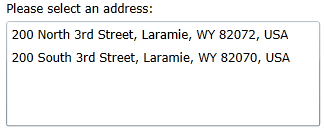
With a single click of a button a user can select the correct address, which will also be correctly formatted automatically for users. The data validation that was once was impossible in older systems takes two clicks in RiteTrack.
What is more, with a single click RiteTrack can access a Google Maps search of the address in a separate browser tab and users instantly have access to the power and functionality of Google’s software. No retyping the address; no copy and paste; it just works.
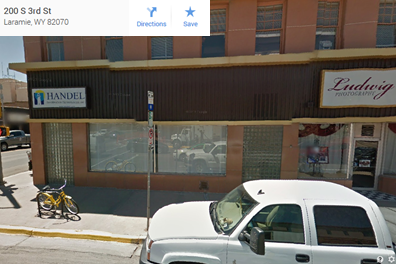
By being able to access Google Maps from inside of RiteTrack, users can not only view a map and a street view of a location, but can also get directions there, export those directions to their smart phones and other devices, or use any of Google’s other functionality. The power that users have come to expect from their personal devices can now also be brought to their offices. Handel believes that if your smart phone can do it, your enterprise software should as well.