Tribal Elder Service Tracking: Meals, Transportation, and Support
By Tiffany Edmonds
Tribal Elder Programs provide a wide range of services that help elders stay connected, supported, and cared for in their communities. From meals and transportation to home visits, caregiver support, referrals, and case management, these programs often manage many moving pieces at once.
Each service provided tells part of the larger story of the program’s work. A meal delivery is not just a meal delivery. A ride to an appointment is not just a ride. A referral, home visit, caregiver support service, or case note may all become part of the information a program needs for reporting, planning, and understanding its impact. But when service information is tracked in different spreadsheets, paper files, calendars, documents, or shared drives, it can become harder to see the full picture. For programs still trying to organize information across multiple tools, this often connects back to a larger challenge: how to better manage Tribal elder program data without relying so heavily on spreadsheets.
Elder Program Services Are Often Connected
One of the challenges for Tribal Elder Programs is that services are rarely isolated from one another. An elder may receive home-delivered meals, transportation to medical appointments, information and assistance, and support through referrals or case management. A caregiver may also be receiving support, training, counseling, respite care, or help accessing resources.
When each service is tracked separately, staff may only see part of the story. One spreadsheet may show meal deliveries. Another may show transportation. Another may show caregiver support. Paper notes may hold important context about the elder’s needs, while documents may be stored somewhere else.
Over time, this can make it harder to answer basic questions such as:
- What services has this elder received?
- How often are we providing transportation?
- How many meals are being served or delivered?
- Which supportive services are being used most often?
- Are caregivers receiving the support they need?
- Are we seeing changes in service needs over time?
The information may exist, but if it is scattered across multiple places, it is harder for staff and leadership to use.
Meal Tracking Is More Than a Count
Meals are one of the most visible services many Elder Programs provide. For some programs, this may include congregate meals, home-delivered meals, nutrition education, nutrition counseling, or other nutrition-related support.
At first, meal tracking may seem simple. Programs need to know how many meals were served or delivered. But in practice, there may be more information involved.
For example, staff may need to track:
- Who received meals
- Whether meals were congregate or home-delivered
- How many total meals were served or delivered
- Which household or address received home-delivered meals
- What days meals were delivered
- Who delivered the meals
This information can support reporting, but it can also help the program understand demand. If home-delivered meal requests are increasing, staff may need to adjust routes, staffing, funding plans, or communication with leadership. If congregate meal attendance changes, that may also tell the program something about access, participation, or community needs.
When meal data is organized, it becomes easier to see more than the total number of meals. It becomes easier to understand who is being served, how often support is being provided, and where needs may be growing.
Transportation Tracking Can Show Demand and Access Needs
Transportation is another important service for many Tribal Elder Programs. Elders may need rides to medical appointments, community activities, meal sites, program offices, or other important destinations. Transportation tracking can become complicated quickly, especially when staff are managing pickup locations, destinations, appointment times, drivers, recurring rides, return trips, and service totals.
A strong transportation tracking process should help programs understand:
- Who received transportation
- Where they were picked up
- Where they were going
- How often rides were provided
- How many one-way trips were completed
- Who provided the transportation
- Whether transportation needs are increasing
- Which destinations or appointment types are most common
This kind of information is useful for reporting, but it can also support day-to-day coordination. Staff may be able to better plan routes, identify scheduling patterns, understand demand, or explain transportation needs during funding and planning conversations.
Without organized tracking, transportation data can easily become scattered between calendars, notes, spreadsheets, and driver communication. That may work in the moment, but it can make it harder to review service history or report accurate totals later.
Supportive Services Need Context
Supportive services can include many different types of help, depending on the program and the services offered. This may include information and assistance, outreach, home visits, case management, referrals, homemaker services, chore services, telephone contacts, social events, or other forms of elder support.
Because supportive services can vary so much, they can be especially difficult to track consistently. For example, a staff member may document a home visit in one place, a referral in another, and a follow-up note somewhere else. Another staff member may track similar information differently. Over time, that can make it harder to understand how much support was actually provided.
Good supportive service tracking should help staff connect service activity back to the right elder, case, household, caregiver, or program area. It should also make it easier to review what happened before, what follow-up may be needed, and what information may need to be included in reports. That context matters. A service count can show how many times something happened, but service history can help explain the support behind the number.
Caregiver Support Should Not Be Overlooked
Caregiver support is another important part of the larger service picture. For programs connected to Title VI Part C, caregiver support may include services such as caregiver information, assistance accessing services, counseling, support groups, caregiver training, and respite care.
Tracking caregiver support can be challenging because the service may involve both the caregiver and the elder or individual receiving care. Programs may need to understand who the caregiver is, who they are connected to, what type of support was provided, how often support was delivered, and whether follow-up is needed. When caregiver support is tracked separately from other program activity, it can be harder to understand the full relationship between elder needs, caregiver needs, and program services
Organized caregiver support data can help programs better understand:
- How many caregivers are being served
- What types of support caregivers are receiving
- Whether caregiver needs are increasing
- How caregiver support connects to elder services
- What follow-up or referrals may be needed
- How caregiver services contribute to the program’s overall impact
This information can be valuable for reporting, but it can also help programs recognize where families and caregivers may need additional support.
Better Tracking Reveals the Full Picture
When meals, transportation, supportive services, caregiver support, referrals, notes, and documents are all tracked separately, staff may only see pieces of the program’s work.
A more organized approach helps connect those pieces.
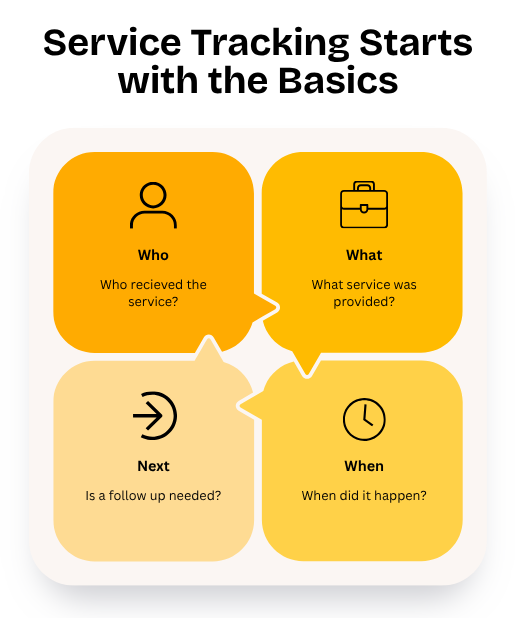
Instead of asking staff to search through several different tools, better service tracking makes it easier to understand the full history of support being provided. Staff can see what services were delivered, when they happened, who was involved, and what may need to happen next. This can help with not only daily service coordination, but also things like reporting preparation, internal reviews, program planning, and funding conversations. In other words, service tracking is not just about collecting information. It is about making that information useful.
When data is organized, it becomes much easier to use it for more than compliance.
Service Tracking Supports Reporting
For programs connected to Title VI grants, service tracking is also closely tied to reporting. Title VI grants support nutrition, supportive services, and caregiver support services for American Indian, Alaska Native, and Native Hawaiian elders. Because those service areas are connected to reporting responsibilities, programs benefit from tracking information in a consistent way throughout the year. This is especially important when programs are preparing for Title VI PPR reporting and need to review service information across nutrition, supportive services, and caregiver support. Waiting until reporting is due can make the process harder, especially if staff have to pull numbers from spreadsheets, paper files, calendars, and handwritten notes.
When services are tracked clearly as they happen, reporting becomes less about searching for missing information and more about reviewing data that has already been collected. That can save time and reduce stress for staff while also giving programs more confidence in the information they are reporting.
Better Service Data Can Support Better Decisions
The value of Tribal elder service tracking goes beyond reporting. It can also help programs make better decisions. For example, organized service data may help show that transportation requests are increasing, home-delivered meals are reaching more households, caregiver support needs are growing, or certain services are being requested more often than expected.
That information can help programs plan ahead. It can support conversations around staffing, funding, outreach, service expansion, or process improvements. It can also help leadership better understand the work being done and the needs being seen by program staff. Without organized service data, those patterns may still exist. They are just harder to see.
Making Service Tracking Easier to Use Day to Day
Tribal Elder Programs do important work every day. The systems used to track that work should make it easier for staff to manage services, understand needs, and prepare for reporting.
When meal deliveries, transportation, supportive services, caregiver support, referrals, notes, and documents are tracked in a more organized way, staff can spend less time piecing information together and more time coordinating the next step. That could mean confirming whether an elder is already receiving meals, checking transportation history before scheduling another ride, reviewing recent notes before a home visit, or seeing what caregiver support has already been provided.
Small details like these can make a big difference in day-to-day program management. They can help staff avoid duplicate work, keep service history easier to follow, and make sure important information does not live in only one person’s notebook, spreadsheet, or inbox. Over time, that creates a clearer picture of the program’s work and makes it easier for staff to stay on the same page.
For programs managing several services at once, better tracking is not just about having cleaner data. It is about making information easier to use when staff need it most. RiteTrack’s Tribal software solutions are designed to help Tribal programs manage important information in a more centralized, practical way.