
Why Tribal Elder Program Data Needs to Move Beyond Spreadsheets
By Tiffany Edmonds
Tribal Elder Programs play an important role in helping elders access the services, resources, and support they need to remain connected, cared for, and supported in their communities. From meals and transportation to home visits, referrals, caregiver support, and general case management, these programs often touch many different parts of an elder’s life.
Because of that, Tribal elder program data matters.
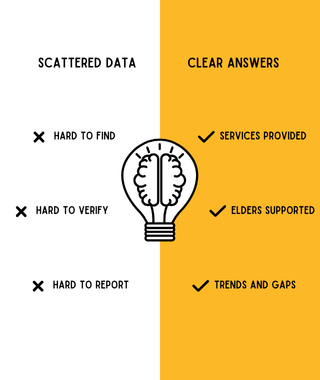
It is not just information sitting in a spreadsheet. It can show who is being served, what services are being provided, how often support is delivered, where needs are growing, and how the program is making an impact. But when that information is spread across paper files, spreadsheets, Word documents, shared drives, or disconnected systems, it becomes much harder for staff to use that data in a meaningful way.
For many Tribal Elder Programs, spreadsheets may work well enough at first. They are familiar, flexible, and easy to start using. But as services expand, reporting requirements grow, and more staff members become involved, spreadsheets can quickly become harder to manage.
The Problem with Manual Tracking
Most programs do not choose spreadsheets because they are the perfect solution. They use them because they are available.
A spreadsheet can track a list of elders. Another can track meal deliveries. Another may track transportation. A Word document may hold notes. Paper files may include applications, forms, and supporting documents. A shared drive may hold scanned records or reports. Each piece may make sense on its own, but over time, the information becomes harder to connect.
That can create challenges such as:
- Staff entering the same information in multiple places
- Reports taking longer to compile’Service history being difficult to find
- Notes or documents being stored separately from the person or case
- Leadership having limited visibility into program activity
- Data being harder to verify when reporting deadlines approach
This is especially important for programs connected to Older Americans Act Title VI funding, which supports nutrition, supportive services, and caregiver support services for eligible Native elders. Title VI grants are used to fund nutrition, supportive services, and caregiver support services for American Indian, Alaska Native, and Native Hawaiian elders. When programs are responsible for tracking this kind of activity, the way data is organized throughout the year can make a major difference.
Data Should Help Staff, Not Slow Them Down
Good data tracking should make daily work easier. It should not create more work for staff who are already balancing service delivery, reporting, communication, and community needs.
For example, when an elder receives transportation support, that information may matter in several different ways. Staff may need to know the pickup location, destination, appointment time, driver, and number of one-way trips provided. While information entry at this level may seem tedious, it is all information that staff need in order to successfully fulfill their duties, and it may also need to be available later for reporting, service history, planning, or internal review.
The same is true for meals, home visits, information and assistance contacts, caregiver services, referrals, documents, and case notes. Each interaction may feel like a small piece of information in the moment, but over time, those details tell a much bigger story about the program’s work.
When Tribal elder program data is organized in one place, staff can spend less time searching for information and more time using that information to support elders.
Better Data Supports Better Reporting
Reporting is one of the biggest reasons Elder Programs need reliable tracking methods. Even if a program is not thinking about reporting every day, the information needed for reports is being created throughout the year.
If service data is incomplete, stored in multiple places, or tracked inconsistently, reporting can become a stressful process. Staff may have to go back through spreadsheets, paper files, calendars, emails, and handwritten notes to pull together the information they need. That can take time, and it can increase the chance that something gets missed.
The Title VI Program Performance Report, or PPR, is one example of why organized data matters. The Administration for Community Living (ACL) states that the Title VI PPR must be completed and submitted annually, covers both Part A/B and Part C programs, and is part of program accountability. ACL also notes that reporting helps keep Tribal council, elders, and the community informed about program operations. Reporting is not only about meeting a requirement. It is also an opportunity to show what the program is doing, how often services are being provided, and how elders and caregivers are being supported.
Program Visibility Matters Too
Beyond required reporting, organized data can help programs better understand their own impact.
For example, leadership may want to know:
- How many elders are receiving meals?
- How often transportation is being provided?
- Which services are being requested most often?
- How much caregiver support is being delivered?
- Are there patterns in referrals, home visits, or case management needs?
- Where is staff time being spent?
- Are there gaps in service access or documentation?
When this information is easy to access, it can support planning, funding conversations, internal decision-making, and communication with Tribal leadership. It can also help programs identify trends before they become bigger issues.
Without organized data, those answers may still exist somewhere, but they are harder to find and harder to trust.
What Better Elder Program Data Tracking Should Include
Every Tribal Elder Program is different, so no system should assume that every program works the exact same way. However, strong elder program data tracking should generally help staff manage information such as:
- Elder and caregiver records
- Services provided, including nutrition
- Transportation activity
- Referrals
- Case notes
- Documents
- Home visits or contacts
- Status history
- Reporting data
It should also make it easier to connect those pieces together. Staff should be able to see the person, the services, the notes, the documents, and the reporting information without jumping between several different tracking methods. That kind of visibility can make the system more useful for daily work and more helpful when it is time to compile reports.
The Earlier Data Is Organized, the Easier Reporting Becomes
For Tribal Elder Programs still relying on spreadsheets, paper files, Word documents, or disconnected systems, moving to a more centralized tracking process can feel like a big step. But it can also make daily work easier, especially when the system is built around the types of services Elder Programs actually provide.
The right system should support the program’s workflow, not force the program into a structure that does not fit. It should make information easier to enter, easier to find, and easier to report on later.
As RiteTrack continues expanding support for Tribal programs, our focus remains on helping programs manage important information in a way that is practical, organized, and built around real program needs. For Elder Programs, that starts with better data.
Because when Tribal elder program data is easier to manage, it becomes easier to see the full impact of the work being done every day.
Moving Toward Better Tools
One of the best ways to reduce reporting stress is to organize data before reporting season arrives.
If a program waits until the end of the year to clean up service data, it may be difficult to know whether everything was captured correctly. But if staff are tracking information in a consistent way throughout the year, reporting becomes less about searching for missing pieces and more about reviewing information that has already been collected. That can save time, reduce duplicate work, and give programs more confidence in the numbers they are using. It can also help programs tell a stronger story. Instead of only reporting what was required, programs can better understand the full picture of what they provided, who they served, and where their work made an impact.