











The Multi County Juvenile Detention Center (MCJDC), in Lancaster Ohio, is a 48-bed facility that went live with RiteTrack in 2018. Multi County was using an old detention management system primarily for intake. Their old system could not manage incident reports, room confinement calculations or youth personal property. This system also didn’t allow for data collection or reporting capabilities, and the facility relied on paper documentation and Excel spreadsheets to supplement it and help run the organization.
Register to watch the case study recording where you can hear the director and assistant director of MCJDC discuss their experiences with implementing and using RiteTrack as their case management and reporting database system.

You may be able to relate to the Director of the MCJDC, Dana Moore, who said in the past if she wanted medical information on a youth or to see if a social worker met with a youth that she would have to ask the staff. Now with RiteTrack all Director Moore must do is open the youth’s file in RiteTrack, and all the information on a youth is stored in one easily accessible location. Moore can see how many incident reports she had, the type of incident reports, along with demographic data on the youth at the facility.
Director Moore also reported that staff is more engaged with the youth. The staff feel more empowered in their interactions as they have access to information on youth. MCJDC employees also report that the RiteTrack system is easy to use, and they can locate information quickly. Dana and the MCJDC staff report that intakes are completed in less than half the time it took previously which enables staff to have more time to provide service to the youth.
Handel worked closely with MCJDC to customize reports that provide Moore with up-to-the-minute data on what’s occurring in the facility as well as summarizing the previous day’s events involving the youth. Director Moore is now able to utilize a case management and facility management system that meets the requirements of the State of Ohio and facilitates real-time data collection. Required annual reports often took days to compile but are now completed within a few moments drawing from the data entered daily into RiteTrack. These reports can be exported to Excel or PDF formats as well. Exporting to these formats from RiteTrack is standard functionality.
One of the biggest differences Director Moore sees between the previous solutions and RiteTrack is the support provided by Handel. “With the old vendor there could be days of e-mailing back and forth before we could get an answer,” but with Handel she said “I always get an immediate response with we call even on evenings or weekends. It doesn’t matter because the project manager was always there for us.”
For more information about RiteTrack or to schedule a demonstration click here.
When the Multi-County Juvenile Detention Center in Ohio decided to implement a new case management software system two years ago, they had several goals in mind:
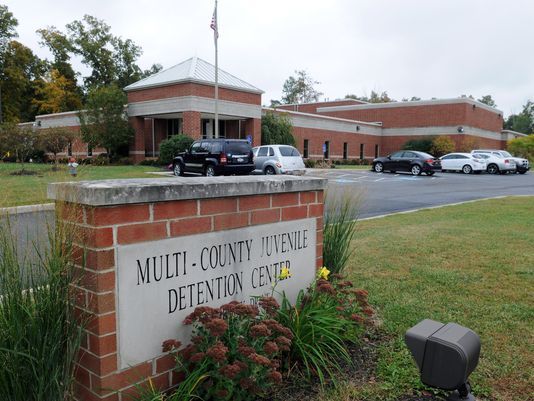
The MCJDC is a 48-bed facility that serves boys and girls. They accept youth from four Ohio Counties: Fairfield, Licking, Hocking, and Perry. In the fall of 2017, Multi-County chose the RiteTrack Juvenile Case Management software from Handel Information Technologies. The implementation project kicked off in late October 2017 and Multi-County went live on their new system on January 1, 2018.
During a recent webinar, Steve Koenig from Handel sat down with Dana Moore, Multi-County Superintendent, and Bret Sark, Deputy Superintendent, to discuss their experience with RiteTrack (RT) some 15 months after going live.
The following is a summary of some of the key takeaways from this conversation. Some of the wording has been paraphrased for clarity and in some cases similar topics have been grouped together.
Multi-County is required to report back to various stakeholders. With the old process it was very tedious and sometimes outright difficult to find, collect, and report back good information.
The old process consisted of many disjointed systems including multiple Excel spreadsheets, paper forms, and a case management database. In many cases, one employee may have a specific spreadsheet for specific information that would not be shared with others. According to Dana Moore, when someone requested information or staff needed information there was generally a lot of time wasted running around looking for the data or even finding the person who had the statistics. “It was not only difficult gathering the information we needed to make decisions and to provide services to the youth served, but it was also very difficult compiling the necessary reports required both internally and externally,” she says.
“With the new system, we have instant access to all the information we need at our fingertips. When someone calls for information we no longer have to say ‘Hold, please; we will get back with you.’ We can give instant answers, and we now have high quality information readily accessible so that we can make decisions in real-time.”
RiteTrack also gives them a battery of standard reports as well as reports specifically customized for them so that they now can provide feedback to their stakeholders with the click of a button.
Dana and Brett repeatedly mention the importance of having a centralized, web-based system, where data is available in real-time. Yet, security for sensitive information is also vital. Access to the centralized system is set up through different security groups so that individuals logging on to the system have access only to the information required for them to do their jobs. For instance, law enforcement personnel may just have access to basic client demographics, whereas a shift manager may access incident reports, restraints, and room-confinement information.
The focus of this initial phase has been on the intake process which is the heart of their operation. Dana says they were surprised to find out how many of their needs were met by RiteTrack “directly out of the box.” They had initially expected that they would need to do several customizations but decided to dive in and discover what RiteTrack could do for them at the start. What they found was that RT right away met most of their needs and so they were able to keep customizations to a minimum.
“There isn’t any information from our facility that doesn’t go into RT somewhere,” says Dana. She believes that having all this information allows staff to be better at time management which makes them more efficient and which ultimately leads to better decision-making.
Another key benefit Dana mentions is RT’s ability to export data to Excel. Since all staff are very familiar with Excel, this is of great value. RiteTrack gives them a centralized system for all their data but they can still export to Excel and do further data analysis as needed.
A further benefit Dana declares is that their paper consumption has been cut in half since implementing RT. Not only that, but they have been able to scale back their copier contract also and these translate to some significant financial savings.
Brett additionally explains how some of the reports in RiteTrack have helped improve the quality of information. “The Missing Data Report gives us direct insight into what important data fields our employees may miss, and we can catch those mistakes and correct them. In the past these have gone undetected and have caused problems down the road. Having access to staff information, attendance, and performance records is also very valuable.”
Multi-County went live after only two months of implementation work. Dana credits this speedy process to their willingness to see how much they could use the system right “out of the box” and not to over-customize RT. “Once we dived in, we actually cut in half what we thought we needed to customize,” she says. She strongly emphasizes the importance of plunging in rather than doing too much speculation as to what an agency may want. She recognizes that change is hard, and most employees don’t like big changes. Yet, she has found that her employees picked up RiteTrack very quickly. “It is so intuitive,” she adds. “After just basic training, our employees figured it out. It also helps that the system is organized very logically and that it guides us through the intake process step-by-step.” Talking about the go-live date on January 1, 2018 she readily says, “We didn’t have a single glitch that first day. All of our data was there and our reports were spot on.”
Dana and Bret also credit Handel’s Project Manager, Jeanne Wolcott, and Steve Koenig for being instrumental in their success. “There were times when it would have been really easy to hit the panic button had we not had Jeanne on the other end to guide us and give us ready answers. When we needed help, she would jump and do a screenshare, showing us how to do things.”
“During the week that your staff spent here at the initial kick-off, you pulled in someone from every side of the facility to answer questions such as: What are your needs and what do your reports look like? You were able to understand our needs and then demonstrate how RT could meet those needs. I can’t imagine a better process. That was huge. Everyone felt valued and it was a big part of getting everyone’s buy-in. They felt that they were heard.”
“The success for us was the team you provided. It made the transition very seamless and positive. Doing the project in smaller phases is also something I strongly recommend.”
Brett and Dana are both very complimentary about their experience since going live in January 2018. “Handel’s support is absolutely first class.” When asked about the biggest difference between their former vendor and Handel, Dana doesn’t hesitate, “With the old vendor, there could be days of emailing back and forth before we could get an answer. With Handel we get an immediate response when we call—evenings, weekends, or even holidays. It doesn’t matter. Jeanne is always there for us.”
She brings up an example of a recent incident. Ohio Department of Youth Services recently visited them and needed a report in a very specific format. RiteTrack didn’t have a report in the exact format they needed so they called Handel. Within one hour they had their report. “This is almost unheard of,” Dana recounts.
As Multi-County continues to realize the immense impact RiteTrack has had on their operations, Dana says she is making plans for future expansions. “Our next goal is to expand RT into the clinical area so that our medical department can use it. We also plan to implement support for the Topaz signature pad.”
“When a mandate comes down requiring some new report, we have the confidence that RiteTrack can provide the answers.”
The Yurok Tribe was awarded a portion of the FY 2018 Enhancing Community Responses to the Opioid Crisis grant. This is a grant intended to provide additional support for the youngest members of their community who are affected by the opioid crisis with a program that will use evidence-based and culturally appropriate tactics. In this grant submission they identify their integrated RiteTrack database system as integral to managing data from multiple departments involved in these cases which they will use to create a feedback system for continued assessment. The programs/departments included on this system are:
We are honored to partner with the Yurok Tribe on this initiative to improve the lives of some of their most vulnerable citizens.
Read here for additional information about Yurok’s award and program here.

In January of 2018, the Multi-County Juvenile Detention Center, a 48-bed juvenile facility located in Lancaster, Ohio implemented a new RiteTrack database system.

Photo: Jess Grimm/Eagle-Gazette
The facility’s old system was used for tracking intakes and youth demographics but could not provide them with critical information on staff workload, incidents, or shift logs. To obtain this information, the Director of the facility Dana Moore had to review the paperwork associated with each shift. “The only way I could find out about an incident report or a meeting with the social worker or nurse was if I received a paper copy of it or if someone came and told me about it,” she said. With the new system “I can see what is going on with youth simply by opening their file in RiteTrack.”
It was clear that the facility needed a new system. Moore wanted one that allowed them to see data in real-time as events unfolded. Staff and administrators preferred a solution with a simple interface that gave them easy access to what happened on previous shifts as well as current events on the youth. The new system should also provide real-time, reliable and valid data to use in the reporting to the Ohio Department of Youth Services and the governing board.
After a thorough investigation of offerings, the Multi-County Juvenile Detention Facility opted to implement RiteTrack. This new system provided staff and administrators with a focus on the intake process, incident reporting, social worker case notes, and nursing documentation. The powerful reporting capabilities in the new system has transformed mere data into useful information which in turn guides decision-making and even has the potential to direct policy-making. RiteTrack records activities from previous days and shifts and tracks current facility activities including daily shift assignments, staff call-offs, facility inspections, youth room confinement time, room confinement reason, incidents, youth location throughout the day, and offsite appointments.
With the engagement of Dana and her full staff, the implementation of RiteTrack into the Multi County Juvenile Detention Center has been a major success. “It’s always a pleasure to ease the workload of staff and witness the reduction in reams of paper,” said Jeanne Wolcott, Project Manager.
The initial success of the implementation has prompted further discussion of future projects which may include additional reporting needs, school billing capabilities, and signatures of youth and staff within RiteTrack. “It is so nice to have everything stored in one place, I don’t have to look through all these different binders to get information on a kid,” said Moore.
Handel creates RiteTrack, a web-based, centralized database, information management software that is used by juvenile justice agencies throughout the country. It provides the primary means for caseworkers, administrators and other professionals to manage their clients and caseloads and provides reliable reporting to generate reliable data.
Kitsap County went live on RiteTrack in January 2017. In this video clip, Michael Merringer, Director of the Kitsap County Juvenile Court Administration talks about the implementation of RiteTrack, it’s impact so far, and what it is like to work with Handel.
 Kitsap County Juvenile Family and Court Services went live on a RiteTrack system in January 1, 2017. This implementation represents the culmination of years of work and planning to create a system that spans data from three areas: juvenile detention, youth offenders, and non-offenders.
Juvenile detention cases encompass sentenced youth or youth brought in by law enforcement. Youth offender cases cover drug courts and diversion efforts while non-offender cases deal with children in need of services (CHINS), at-risk youth (ARY), child protective services (CPS), and truancies. With all of this juvenile case management information centralized, the ease that staff can provide services to has been bolstered.
The County signed a contract with Handel in April of 2016 and many of the staff worked diligently on defining the scope and working closely with the designated Project Manager to outline processes to incorporate into the system. Project Manager Ben McKay said “our success is based on our partners, and the dedication from Kitsap’s team helped ensure the successful implementation of this project.”
Kitsap County Juvenile Family and Court Services uses RiteTrack’s standard functionality and also configured the system to meet specific needs and create specialized reports. One of the most valuable reports is the juvenile year-over-year comparison that aggregates data from the system including the length of stay and demographics to provide a big picture of trending changes and generates data to submit to the state of Washington for reporting purposes.
In order to recognize the hard work and diligence that went into a successful project of this scope, the County held a celebration February 16, 2017. (Read our blog about it here) We’re so pleased to have developed a strong, working relationship with the leadership and staff at Kitsap County Juvenile Family and Court Services.
Kitsap County’s Juvenile Department/Superior Court is committed to providing innovative, comprehensive, and effective services to youth, families, schools and the community within a quality work environment, by professional, caring staff.
Handel creates RiteTrack, a web-based, centralized database, information management software that is used by juvenile justice agencies throughout the country. It provides the primary means for caseworkers, administrators and other professionals to manage their clients and caseloads and provides reliable reporting to generate reliable data.
It all began with a conference presentation on OneNote and a question.
 “This could be described as a ‘textbook project,” said Bud Harris, Director, Information Services. “It began at the right place, the right time, with the right thought processes, and all the right people came together.”
The concept that grew into the Kitsap County Juvenile Family and Court Services RiteTrack Case Management System came from the question: what if involved youths’ records could be better managed and the information shared between programs?
Michael Merringer, Juvenile Court Administrator, became involved with probation in the 1990s and found that common practices for managing youth records created segregated, unreliable information. Every time a juvenile came into detention, they would make a new paper file for them that would include assessments, medical history, and recommended programming which could not be easily shared nor was it common to share cross-department.
However, following the seemingly commonplace OneNote presentation, Merringer had a flash of insight. Wouldn’t it be great if they operated with ONE file for ONE kid? All forms would be carried in that file, staff would have access, various people could contribute, and everyone would have access to the information they needed (subject to appropriate security restrictions) while keeping everything up-to-date.
This was the vision that blossomed into the carefully planned, meticulously implemented project with an overall goal of improving access, security and accuracy of client information, examining and improving internal processes, and providing reliable, statistical data.
 Sometimes projects also provide unintended benefits. Merringer said the RiteTrack project had such a benefit: process improvement. The key philosophy applied in this project was to look at the process first before applying the technology. The staff improved processes during the mapping phase by cutting out redundant efforts and wasted activity. Mapping processes across multiple departments created a visual representation of how each department dealt with their processes and cases, and was valuable because it provided visuals of the processes to assist in directing the technology. Because of this project, the Department can monitor processes and continually improve them to better meet the needs of staff, too.
After defining many internal processes, the department went to look at available options for juvenile justice information management systems. As with most system explorations options included building in-house, buying off-the-shelf, or some combination thereof. To find how other jurisdictions managed their juvenile data they visited other counties in the state and kept hearing about the RiteTrack Juvenile Justice Software from Handel IT. Because they defined processes prior to searching for a solution, they were able to use them to match process flows with available offerings.
Following the review of available options, the Department found that RiteTrack offered the combination of an off-the-shelf solution paired with configuration capabilities that could create a solution to perfectly fit the diligently outlined processes. After a competitive bidding process in 2015, RiteTrack and Handel were chosen as the solution and vendor for this project.
 “Over several years a group of dedicated individuals accepted the challenge of creating an electronic environment for case management for the Department. Members of the team came from every area of the County and Juvenile Department. Working together as a team, the successful development of the Juvenile Department’s RiteTrack Case Management System was realized,” the Department’s launch party invitation read.
Kitsap County went live on its new RiteTrack Juvenile Case Management system on January 1, 2017. A celebration of the successful implementation and go-live took place in the offices of the Kitsap County Juvenile Court Administration on February 16. Handel is pleased to partner with the Department and provide the tools to help create its ideal data management solution for its involved youth.
The Scotts Valley Band of Pomo Indians Tribal TANF Program went live on a new RiteTrack TANF system on January 30, 2017. The Program contracted with Handel for the new system in November of 2016 and the fast execution of the contract speaks to Handel’s ability to quickly implement an enterprise-level information management system that manages a large amount of tribal TANF cases for multiple counties.
Their new RiteTrack Tribal TANF solution contains functionality specific to California Tribal TANF requirements, and Handel completed a data conversion for the program as well. Handel has standard data conversion tools and uses these when possible to convert existing data from legacy systems.
The Scotts Valley Tribal TANF Program and Handel enjoy a close working relationship, which contributes to creating the best possible solution for the Program and helping it better serve its clients.
The Scotts Valley Band of Pomo Indians is the Health and Human Services (HHS) Administration for Children and Families (ACF) designated social services provider for Contra Costa County and provides assistance under the Tribal TANF program to all eligible Native American Families residing in the county. The Program also serves enrolled members of the Scotts Valley Band of Pomo Indians who reside in Sonoma, Lake and Mendocino Counties and Big Valley Tribal Members residing on and off Big Valley Rancheria.
The mission of Scotts Valley Tribal TANF program is to provide culturally relevant social services with the goal of encouraging the formation and maintenance of healthy and self-sufficient Native American families, supporting the preservation of two-parent households, inspiring individual growth, and preserving positive cultural traditions within our Native American Communities.
Handel specializes in creating the best possible software solutions for American Indian service agencies. RiteTrack is software for tribal, state and county government. RiteTrack serves tribal nations throughout the country in nearly every tribal department. With the experience and accountability that Handel offers, RiteTrack is the trusted information solution that tribal social services can rely on.
The Ramsey County Community Corrections Department went live on its new RiteTrack Juvenile Justice system in March of 2015. Ramsey County originally partnered with Handel IT after selecting RiteTrack through a competitive bid process in 2014 to replace two separate systems that had managed their juvenile detention facility and residential facility, respectively. The project was begun with aggressive goals not only to combine the two facilities onto one system, but also to analyze business processes and then synthesize them between the two facilities, convert and merge data from the two previously disparate databases, maintain accurate JDAI reporting, and integrate with a data warehouse hosted by the State of Minnesota.
“This project has been a great test of RiteTrack’s powerful security model” says Even Brande, President and CEO of Handel. “It has accomplished one of the key goals of this project which was to reduce duplicate data entry since many of the youth spend time in both facilities at different times. Yet RiteTrack’s security ensures that staff in each facility can only see the data that is pertinent to what happens in that facility, yet shares common data between the two.”
“The outcome of this project has been of great benefit to both my users and myself as a system administrator,” according to Dan Merth, the Customer Project Manager for the software implementation. “We have accomplished all of the goals we had for the initial roll-out of RiteTrack. Two obsolete systems were combined into one intuitive web-based design that is capturing all of the critical client information our case managers need on a daily basis, as well as the high level data our management uses to track trends and focus resources such as staffing levels. The project was completed on time and on budget and I am eager to work with Handel on future customization and enhancements to Ramsey County’s RiteTrack application.”
Throughout the project, Handel’s standard process for implementation of a software system was utilized. This process began with business and systems analysis and was followed by a formal system design. After the design was officially signed off by both Ramsey County and Handel, customization was added on top of RiteTrack’s standard Juvenile Justice Facilities system. Data migrations and the subsequent data merge from the two legacy systems, report development, and the integration with the State of Minnesota data warehouse all happened in parallel with the software customization.
“Large and complex projects such as the Ramsey system have an incredible number of points where a project can run into problems. Especially when large numbers of tasks are running in parallel to each other the complexity of large enterprise-level systems can almost seem overwhelming. The key to project success is clear communication and synergy between the Project Managers and other key staff members on both sides. Ramsey County is a perfect case study in how software implementations should happen; it has been a huge pleasure working with Dan and his team and I am looking forward to a long and lasting relationship with their office,” said Ben McKay, Handel’s Project Manager for the Ramsey software solution.
“The design and development process went better than any other large scale software project I have been involved in,” said Dan. Handel’s design model includes screen mockups and descriptions of each function to ensure that there are no surprises when development begins. Additionally, Handel’s customer support has been excellent, it is nice to know that Ramsey County Corrections has partnered with a responsible vendor who cares just as much as I do about data and reporting accuracy, system functionality, and customer service.”
Ramsey County is currently pursuing a second phase to their RiteTrack project to add additional functionality to further enhance their ability to serve youth in the juvenile justice system.
“We are very thrilled to having had the opportunity to work with Ramsey County on this project” says Even Brande. “Not only are we looking forward to many years of working with Ramsey County but we also believe this solution will be a model for other communities who are in a similar situation.”
For more information on a selection of the technical processes that were incorporated into the Ramsey project and Handel’s Juvenile Justice Solution please see:

I was told growing up that when you experience success you should act like you’ve experienced it before. Don’t flaunt your touchdown reception or first place finish; act like you’ve been there before. However, I quickly realized that there is a huge difference between simply acting like one has done something and actually having done it.
So, what does this all have to do with software implementations and case management? The simple answer is that there is a large collection of companies out there that claim to be able to take on massive projects to design, develop, and implement a large enterprise-level software solution. How should project leaders with large and complex projects choose a vendor from the plethora of options available to them?
Most people know that in enterprise-level software implementations, risk is proportionally tied to the complexity of the project. If the complexity goes up the risk does as well. With that in mind, what are we to think of projects on the extreme end of complexity? What if we are taking multiple legacy systems and want to put them into one single and comprehensive system? What if we also want to bring multiple departments together onto one single system in that same project? What if there are federal and state reports that must justify from the moment the system goes live? What if we need to integrate with other systems at the same time that everything else is happening? If risk of failure is directly proportional to the complexity of a project, should we even bother attempting such bold initiatives?

Click to Expand
The answer to that final question is a resounding ‘yes’. It is worth pursuing because of the benefits that it can lead to. Bringing multiple systems together reduces complexity and duplication of data entry which, in turn, reduces errors. Having multiple departments or facilities operate on one common platform increases communication and improves outcomes for clients. The risk, in other words, is worth the potential rewards that a system that can do all of those things could bring. However, that one question still lingers… What if it fails?
This is where proven success comes into play. It is not enough to know that a company could potentially complete a project. These projects need a company that has been there before. The type of system described above with multiple data conversions, bringing previously disparate departments together on one system, reporting to federal and state agencies accurately from day one, and integrating with other software systems describes most of Handel’s customers. We have proven success on every single one of our solutions, from unifying government agencies of a Tribe to providing a system that unifies detention and residential facilities for a county.
Large and complex projects require the devoted attention of software professionals who have repeated success and a strong, standard solution. We have devoted countless hours to designing, testing, and refining each of our solutions to meet the needs of our clients with our standard functionality, whether it is for a CPS Department, Juvenile Detention Facility, TANF Department, or a multitude of other systems. This standard functionality not only brings down cost, it also lessens risk.
While most systems require small changes, we have found that our standard platform will accomplish most of the needed functionality within the markets that we serve. Completely custom solutions that are built from the ground up may sound wonderful at the beginning of a project. However, these projects are the most likely to end up over budget, behind schedule, and outside of scope. We at Handel know this because that is how we used to build software solutions. We built our latest version of RiteTrack to combat all of those things; we provide a common framework to all of our customers, thoroughly test and refine each one of our software modules, and send updates to all of our systems whenever we make something better or fix the rare bug we run into. This means that not only is your project more likely to be successful on the front end, but also that our customers never have to worry about having a system that nobody knows how to fix or update five or ten years down the road.
And what of those things that will always be custom to an individual software solution? We handle (yes, pun is intended here) data conversions, systems integration, custom reporting, attaching custom modules to our standard framework, training and system documentation, and everything else imaginable on a regular basis. All of our staff, from our sales personnel to our project management staff to our software developers, are trained to create custom alterations and additions to make our software work for you in the most optimal way possible.

This combination of our standard software offering and our staff’s familiarity with providing insightful and accurate consulting creates a unique environment where we can reduce the risks imposed by time, cost, and scope of a project as a whole while also building a software solution that keeps your legacy data, communicates with other systems, and improves upon your organization’s reporting abilities. Handel’s ability to accomplish all of these extremely complex things comes from our more than 17 years of corporate experience and our tireless efforts to make the best standard software for each industry we serve. Our experience and work makes it possible for organizations to dream big about what their case management software can do for them.
Though these types of projects are large, complex, and sometimes even scary, Handel can help mitigate all of that. We have been there before and our customers have experienced great success using our system. Our track record shows that our methodologies, standard software offerings, and innovative technologies work. So, go ahead and dream big and know that if Handel is your partner your project, no matter how big, will be a success.
Red Lake Nation has partnered with Handel to implement the RiteTrack Tribal Court Module for its Tribal Courts. Tribe-specific configuration for the solution should be completed sometime in late March with a live date set for shortly after that. Red Lake Nation maintains its own Tribal Courts that provide both criminal and civil services for the band members. Court staff handles as many as 2,000 criminal and civil proceedings annually.
The Tribal Social Services Department (TSSD) of the Santa Rosa Rancheria Tachi Yokut Tribe implemented another RiteTrack module which will manage Child Protective Services and Indian Child Welfare in late 2014. This is the second module in the Tribe’s integrated solution and stores member information centrally and is updated consistently from the Enrollment Department or TSSD. The Tribe began with the Enrollment module in 2012. RiteTrack allows tribes to consolidate data and remove the barriers of data silos and stores information in a single database system.
TSSD is an all-encompassing social service provider which focuses on serving tribal members, residents, lineal descendants, and other documented Natives.
The Pechanga Band of Luiseño Indians Tribal TANF department went live on its new RiteTrack system in January 2015. RiteTrack was customized for the unique eligibility requirements of the Pechanga TANF program. With the TANF department live on RiteTrack, a second phase slated to implement the Child Protective Services and Indian Child Welfare Module will begin later this year.
 The Pechanga TANF Program assists low income families moving toward self-sufficiency by providing cash aid and other assistance designed to increase job preparation, employment, and allow children to be cared for in their own homes.
The Mohegan Tribe, a long-standing, honored Handel customer operating a well-integrated RiteTrack solution, recently launched a new Tribal Housing Authority Module in January 2015. This represents the next spoke of the hub-and-spoke information management model for its tribal services. The solution gives the Tribe a central database for member information that provides consistent information across services. Currently implemented spokes are

The National Indian Child Welfare Association (NICWA) has selected Handel IT to present at its 33rd Annual Protecting Our Children National American Indian Conference on Child Abuse and Neglect which is taking place from April 19-22, 2015 in Portland, Oregon. Handel is presenting with the White Earth Nation on the White Earth Coordination, Assessment, Resource, and Education (WE CARE) case management model.
This innovative system-of-care model is client-focused, client-driven and requires client input and involvement throughout service delivery. WE CARE focuses on program collaboration and communication to develop and execute an interdisciplinary plan based on the goals that the client identifies. RiteTrack is used by WE CARE to enable assessment, collaboration, plan development and outcome tracking. Through thoughtful, interdisciplinary planning, careful execution and comprehensive support, the WE CARE program has become an exceptional model for comprehensive service delivery to children and families in Indian Country.
The White Earth Nation WE CARE Model presentation will be from 3:30 – 5:00 p.m. on Tuesday, April 21st. If you will be attending the conference, please attend this presentation. Handel is proud to continue to be involved in the important discussions concerning Indian Child Welfare with NICWA. This is the fourth year Handel has presented on innovative uses of technology in Indian Country for child and family services.
The Red Lake Nation Oshkiimaajitahdah (New Beginnings) program recently began working with Handel Information Technologies to implement the RiteTrack TANF Module. Employment and Training staff will begin using RiteTrack in the coming months, followed by TANF as Red Lake Nation begins taking over TANF cases from Beltrami County.
The Puyallup Tribe of Indians has partnered with Handel to implement the RiteTrack Child Protective Services/Indian Child Welfare and Financial Services Modules. Project planning has begun with the Community and Family Services Department with an initial site visit being scheduled for early 2015.
Handel Information Technologies began working with the Tachi-Yokut Tribe in 2012 when RiteTrack was deployed for the Enrollment Department. This implementation will now become an integrated solution as the CPS/ICW Module is deployed for the Tribal Social Services Department. We look forward to RiteTrack becoming an essential tool for the important work done by Tachi-Yokut Social Services staff.
Handel Information Technologies, Inc. is currently developing and implementing RiteTrack for the Northeastern Nevada Tribal TANF Consortium (NNTTC).
Handel’s integrative, flexible solution will be the perfect fit for the NNTTC because RiteTrack will allow the nine consortium member tribes to input data while maintaining tribal member confidentiality.
One reason the NNTTC decided to partner with Handel is that RiteTrack offers the required, complex security. This security is needed to keep member data confidential in the system between the tribes.
The consortium will submit one federal TANF report with the combined data from all nine tribes using the TANF funds. Programs like the NNTTC’s TANF program are making a difference in tribal nations and families every day. Handel is proud to help support that mission.
The nine tribes or bands that comprise the NNTTC including the Ely Shoshone Tribe, Duckwater Shoshone Tribe, Confederated Tribes of Goshute, Elko Band, Wells Band, South Fork Band, Battle Mountain Band, Duck Valley Sho-Pai, and the Temoke Tribe.
RiteTrack is software for tribal, state, and county governments. Handel works with tribal nations across the country in many tribal departments. Handel is an experienced, trustworthy technology company that goes above and beyond in serving American Indian Tribes and specializes in designing the best possible software solutions for American Indian social service agencies.
For the last six years the Mohegan Tribe of Connecticut has been working alongside Handel Information Technologies. In 2008 the Mohegan Tribe partnered with Handel by implementing their integrative, flexible software solution, RiteTrack.
The tribe improved their processes by adopting Handel’s RiteTrack as the platform for their Tribal Information Management System (TIMS) which is built around a “hub-and-spoke” model. In 2008 the Mohegan Tribe went live with, the “hub” of TIMS, the member enrollment and demographic module. The tribe found immediate success.
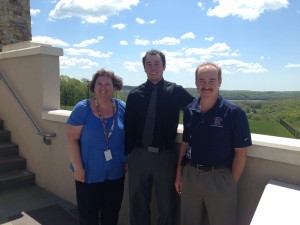
L-R: Jessica Ivansco (Mohegan Tribe), Josh Becker (Handel), and George Wood (Mohegan Tribe)
Over the years, Handel has continually assisted the Mohegan Tribe in enhancing their departments and services. Several spokes have been added to Mohegan’s initial hub including: educational services management, household information management, social services management, and many others.
Just recently Handel developed a cultural spoke for the Mohegan Tribe. The tribe’s cultural module will help keep important traditions alive within the tribal community. The Cultural and Community Program Department now has access to instruction and materials for traditional crafts and skills such as basket making, beadwork, and the making of drums and regalia. Through RiteTrack the department is able to coordinate annual festivals and cultural events such as parades and fairs, the annual Wigwam Festival, and Hot Summer Fun at Mohegan Sun. We are excited to create and deliver another reliable module to a loyal and true, American Indian Tribe.
Handel specializes in designing the best possible software solution for American Indian service agencies. RiteTrack is software for tribal, state, and county government. Our company works with tribal nations all over the United States in nearly every tribal department. Handel is an experienced, trustworthy technology company that goes above and beyond in serving American Indian Tribes.

Over the past year Handel has been working with Natrona County, Wyoming on implementing RiteTrack for managing juvenile justice cases. This project is a pilot of a potential statewide RiteTrack implementation in Wyoming. Through this project we have learned about the Single Point of Entry model which, by Wyoming State Statue, states that every citation issued to a juvenile within a county of Wyoming shall be provided to the County and Prosecuting Attorney before that citation is filed in any court. This statute provides a “single point of entry” for juveniles. The law went into effect July 2011. However, Natrona County have had a Single Point of Entry model in place since the recommendations first came out in 2009 according to Amy Dorman who is the RiteTrack project manager for Natrona County.
When a resident of Natrona County under the age of 18, or over 18 but still enrolled in high school, is charged with a violation of the law, the county attorney reviews the juvenile and their violation with the single point of entry committee. The committee meets every Wednesday and consists of representatives from the district attorney’s office, Wyoming Department of Family Services, the Natrona County School District, Youth Diversion Program, Natrona County Sheriff’s Office, and the treatment providers. Meetings typically last 60-90 minutes during which on average 10-15 new citations are discussed. Upon a preliminary review of the juvenile and his record, a recommendation is made whether to refer the juvenile to a diversion program. If this preliminary review shows that the juvenile is not suitable for the diversion program, recommendations are made that the citation be filed in a court of jurisdiction within the county.
“RiteTrack is a critical part of the weekly single point of entry meeting” says Dorman. “We hook up a laptop or one of our recently acquired Microsoft Surface tablets to a projector so that all the participants immediately can get the big picture on the client and their family. With all the RiteTrack information at our fingertips and representatives from all the key stakeholders in the room it becomes much easier to assess the right path for each individual youth.”
Dorman believes that having RiteTrack as the central juvenile justice case management software in Natrona County helps reduce errors, expedites processing time, and results in better outcomes for the youth served. “RiteTrack is no longer just at someone’s desk. The other day I was visiting a high school and the principal was asking about a youth. Immediately I was able to pull the data up on our Surface tablet and give the principal the information requested.” Dorman also explains that they use RiteTrack in the courtroom where they can enter adjudications in real-time. The Natrona County Juvenile Detention Center uses RiteTrack to manage all processes from intake through discharge.
“Ultimately, having a single point of entry program along with RiteTrack helps keep more kids out of detention and shorten times for those who are there.” says Dorman.
Ramsey County, Minn. has partnered with Handel Information Technologies to implement a RiteTrack juvenile justice software solution to manage its juvenile detention and residential facilities.
The facilities using the powerful, new solution will be the Juvenile Detention Center and the Boys Totem Town.
“RiteTrack is capable of tracking the required data in a juvenile detention environment but also includes all of the functionality that the County’s residential facility needs for case and treatment planning,” said Dan Merth, Project Manager at Ramsey County Corrections Department.
Handel’s project manager said system planning and development is expected to last six-nine months with a flexible implementation timeframe of early 2015. “RiteTrack is designed well for projects where multiple facilities or departments are looking to merge their information sharing needs into one system. Through our proven track record with system design, data migration, and business and systems analysis even complex projects such as Ramsey County’s are launched and implemented quickly.”
RiteTrack will replace multiple systems; a legacy system which was created in an old programming language for the JDC which is no longer supported and a custom-built solution for the treatment facility.
The Mental Health and Juvenile Justice Collaborative for Change Web site says, “Providers rightfully tend to focus on meeting the needs of youth and families, but may fail to recognize the value of data collection and analysis. …In an environment in which demonstrating outcomes is critical, this oversight might be counterproductive.”
“The new RiteTrack system will generate real-time reports and notifications for case workers, administrators and stakeholders. The data collection and reporting capabilities will give the County high-quality information to produce client outcome information,” said Handel’s President Even Brande.
Ramsey County’s juvenile services provide “a structured and positive environment for the development of responsible youth with assistance from community partnerships and services within [the] County.”
RiteTrack, a Web-based juvenile justice software solution, tracks everything in juvenile diversion, detention, corrections and treatment cases from client demographics to treatment plans. This solution is designed to be the single point-of-entry into juvenile-serving agencies. As a youth enters a system, client information is entered into only one place.
Handel creates RiteTrack, a software solution used by juvenile service programs in state and county governments.
This July the Soboba Band of Luiseño Indians Tribal TANF has partnered with Handel Information Technologies who will deliver a TANF solution that will expand into an integrated software solution.
An important factor in the Tribe’s decision to upgrade to RiteTrack was the modular nature and consideration for future growth inherent in the solution.
As a Sovereign nation, our mission is to assist American Indian families and future generations to reach their fullest potential in securing economic stability while encouraging wellness in the family. Soboba Tribal TANF strives to provide welfare related services to eligible Native American families who meet all STTP requirements in an equitable and fair method according to customs and traditions.
Handel specializes in creating the best possible software solutions for American Indian service agencies. RiteTrack is software for tribal, state and county government. We work with tribal nations throughout the country in nearly every tribal department. With the experience and accountability that Handel offers, we are the trusted information solution that American Indian tribes can rely on.
Handel implemented a new RiteTrack system for the Natrona County Juvenile Detention Center on May 13.
The newly implemented, juvenile detention case management solution contains functionality for case management, document management, case notes and a wide variety of reporting features. The RiteTrack system replaced the center’s previous paper-based tracking system.
In Natrona County various organizations work together to provide juveniles in need with services. These include community groups, the school district, district attorney’s office, Wyoming Department of Family Services, Department of Corrections, Sheriff’s Office, City of Casper Police, and the Juvenile Detention Center.
The local Project Manager, Amy Dorman, said “RiteTrack has allowed us to view information on the juvenile as a whole including family history, school history, legal background, jail admissions and any assigned groups. It takes time to assess what is really right for a youth.”
The RiteTrack juvenile module met the vast majority of the JDC’s needs right out of the box without much configuration work.
Handel Project Manager Ben McKay said, “The reporting feature in RiteTrack includes custom reports about daily case loads, client populations, client demographics, censuses and one for an attorney in the District Attorney’s office. The ability to collaborate between the JDC’s and DA’s offices is paramount, because the DA does client intake for the JDC.”
RiteTrack is a software solution used by human services programs throughout state, and county governments. It provides the primary means for caseworkers, administrators, and other professionals to manage clients and caseloads.

The State of Arkansas Division of Youth Services (DYS) is using RiteTrack statewide throughout its operations and to manage a network of its service providers throughout the state. This is a multi-agency deployment of RiteTrack where DYS and its service providers around the state connect into RiteTrack over the internet to enter service, placement, transport and billing data. RiteTrack data resides centrally in DYS’ central office, but via the internet, providers can access from different locations around the state. DYS staff uses RiteTrack primarily to track billing related to its eight service providers, as well as to track the placement of the children it helps. RiteTrack also helps DYS with its incident investigations/reports, interstate travel compacts and more. In addition to the multitude of functionality, much of which was custom built for DYS, part of this project also entailed a significant amount of data conversion from DYS’ prior Juvenile Tracking System into RiteTrack.
An Integrated justice information system is the holy grail of information technology for many larger municipalities. Traditionally, counties and cities developed information systems specific to each division. This left information sharing and communication between departments difficult at best.
Before RiteTrack, all case notes were kept on paper by probation officers, all statistics were drawn up by hand. When information was needed, it was only accessible through the individual probation officer. Due to space concerns, when youths were no longer under Whatcom County supervision, files were moved off-site. When youths re-entered the system, requesting and gathering information about them took time and considerable effort.
Whatcom first implemented RiteTrack’s comprehensive information management system in their Juvenile Court Administration to track clients through the court process into detention or other alternative sanctions, and eventually out into the community. For Whatcom County employees, they enter data on juveniles just once and the information follows the youths through the different stages through the legal system. This now not only saves a lot of time, but it integrates the information and allows workers to have a holistic picture of their clients at all times.
Handel’s RiteTrack significantly improves the monitoring of the juveniles in the system by providing a central place for all information relating to a youth to be kept. Legal information, detention information and social information (treatment, school, probation appointments, home visits, etc.) are all kept on RiteTrack where it is instantly accessible to authorized persons. David Reynolds, Juvenile Court Administrator explains, “If I receive a call from a parent relating to a case or probation event, from my desk I can easily access the information relating to the youth. Before we adopted RiteTrack, whenever probation officers needed to provide or obtain information about a youth being detained in our facility, they actually had to physically enter the facility and retrieve the written information, or write the information in the youth’s detention file. Now they can do this from their office without having to leave it. Often times, as well, the Court has us look up information in RiteTrack during court to determine what has been going on with the youth- last time in detention, missed probation appointments, and so on”.
Whatcom County has taken RiteTrack out into the field to the point the on an in-home visit, if probation officers need an arrest warrant, instead of having to leave, get it and come back, officers can notify judges, who can sign the warrant and through RiteTrack’s document manager have it ready on the probation officer’s laptop without worrying whether the youth will be there when they return with the warrant.
As for those statistical reports, according to Reynolds, one report used to take him 30 hours each quarter to compile. Now it takes him less than 30 seconds from start to finish.