What AI Assistance Can Look Like Inside a Case Management System
By Tiffany Edmonds
Artificial intelligence is increasingly finding its way into the tools people use every day. But in case management, the most useful applications of AI may not be the ones that feel the most futuristic.
For staff working in Tribal programs, courts, probation departments, victim services, child welfare, TANF and 477 programs, juvenile facilities, and other public-sector agencies, technology has to work within a much more complicated environment than a typical productivity tool.
There are case notes to document. Services to track. Deadlines to meet. Reports to prepare. Historical information to review. Sensitive data to protect. And, often, staff members are managing all of those responsibilities while carrying significant caseloads.
In that environment, the value of AI is not simply that it can generate an answer quickly. Its value is in whether it can help staff make better use of the information and systems they already rely on.
That is where the idea of an AI assistant for case management starts to become particularly interesting.
Moving AI Closer to the Work
Many people have already experimented with general-purpose AI tools. They can help brainstorm ideas, summarize text, explain concepts, or organize information.
Those capabilities can be useful, but case management presents a different challenge.
The information someone needs is often already contained within their case management system: case notes, service history, demographic information, program activity, deadlines, outcomes, reports, and other records that have accumulated over time.
Much of that information can also be highly sensitive. Depending on the program, case records may include information about children and families, court involvement, victim services, financial assistance, health-related needs, probation activity, or other details that should not simply be copied into an outside AI tool without careful consideration of privacy, security, permissions, and data governance.
When AI exists separately from the case management environment, staff may have to find information in one place, move it somewhere else, provide context, and then determine whether the response is actually relevant to their work. That process can create unnecessary friction while also raising important questions about where sensitive information is being shared and how it is being handled.
Embedded AI assistance changes that relationship. Instead of asking staff to leave the system they are already using, AI can potentially help them understand, navigate, or summarize information within the context of their existing work.
That context is important. A general AI tool does not automatically understand how a particular agency operates, how its information is organized, or what its terminology, workflows, and reporting expectations mean. Within a case management system, information already has structure. Records are connected to cases, data is organized into fields, activities are documented within workflows, and users may have different levels of access based on their roles.
Bringing AI closer to that structure can make the assistance more relevant, but it also makes responsible implementation especially important. Privacy, security, user permissions, and data governance should remain part of the conversation whenever AI is interacting with sensitive case information. For Tribal Nations, those considerations also extend to ownership, control, and Tribal data sovereignty.
The goal is not to introduce another tool that staff have to manage—or another place where sensitive case information has to be moved. It is to reduce some of the friction involved in finding and understanding the information that is already available to them, while keeping privacy, access, and responsible data use at the center of the conversation.
Helping Staff Make Sense of Case Information
Case records can become extensive very quickly. A single participant, client, family, defendant, or case may include months or years of case notes, services, interactions, assessments, documents, court activity, referrals, and follow-up information. That history is valuable, but reviewing it can take time.
One practical use for an AI assistant for case management is helping summarize larger amounts of written information so a user can more quickly understand what has been documented.
For example, a staff member returning to a case after several weeks may need to review recent case notes before a meeting. A supervisor may want a general understanding of recent activity across a case. Another employee may need context before providing coverage for a coworker.
A summary can help orient the user more quickly.
But the distinction between summarizing information and making a decision is important. AI may help organize what has already been documented. The staff member still brings the professional judgment, program knowledge, relationships, and context necessary to determine what that information means and what should happen next.
That is an important principle for AI in any case management environment: assistance should make information easier to work with, not remove people from the decision-making process.
Making Data Easier to Explore
Data quality is often discussed as though it were primarily an IT responsibility.
In practice, it is closely tied to everyday program operations.
How do staff document services? Which fields are required? When should a case status change? Where should a particular piece of information be recorded? Are staff members using the same definitions? What happens when processes change?
Those decisions affect the quality of the information an organization can ultimately use.
Imagine a probation department in which officers use several different terms for the same type of contact. Or a social services program where some staff document referrals in a dedicated field while others mention them only in their case notes.
Each individual record may make sense to the employee who entered it. Across the organization, however, inconsistencies can make reporting and analysis significantly more difficult.
AI does not eliminate the need for clear processes. If anything, it increases the importance of them.
When organizations want technology to help summarize or surface information, consistency gives that technology a stronger foundation to work from.
Supporting Reporting Without Replacing Reporting Expertise
Reporting is an especially important part of public-sector case management.
Tribal and public-sector programs often collect information not only to support day-to-day services, but also to meet funding requirements, respond to leadership questions, evaluate program activity, and prepare required reports.
The challenge is that the person who needs information may not always know exactly which report to run or where particular data lives.
An AI assistant for case management can serve as another way to navigate those questions.
If a user can describe the information they are trying to understand, AI may be able to point them toward reports or views that could be useful based on the data available within the system.
Again, that is different from allowing AI to determine what should be reported or how a program’s results should be interpreted.
The program still decides what matters. Staff still review the information. Reporting requirements still have to be understood and followed.
AI simply becomes another way to connect users with their data.
Clean Data Does Not Mean Perfect Data
Reporting is an especially important part of public-sector case management.
Tribal and public-sector programs often collect information not only to support day-to-day services, but also to meet funding requirements, respond to leadership questions, evaluate program activity, and prepare required reports.
The challenge is that the person who needs information may not always know exactly which report to run or where particular data lives.
An AI assistant for case management can serve as another way to navigate those questions.
If a user can describe the information they are trying to understand, AI may be able to point them toward reports or views that could be useful based on the data available within the system.
Again, that is different from allowing AI to determine what should be reported or how a program’s results should be interpreted.
The program still decides what matters. Staff still review the information. Reporting requirements still have to be understood and followed.
AI simply becomes another way to connect users with their data.
AI Should Reduce Friction, Not Add Complexity
New technology is sometimes introduced because it is new rather than because it solves a meaningful problem. That is particularly risky in environments where staff already have demanding workloads.
The better question for case management is not, How much AI can we add?
It is, Where can AI make an existing task easier without compromising the things that matter?
Maybe that means helping someone get oriented within a long case history. Maybe it means making reporting options easier to discover. Maybe it means helping a user understand what information is available on a dashboard. Maybe it simply means allowing someone to ask a question in familiar language instead of knowing exactly where to look within a large system.
Those may sound like relatively modest uses of AI.
That is not necessarily a limitation.
In case management, technology that quietly removes small points of friction throughout the day can be far more valuable than technology that attempts to fundamentally change how professionals do their jobs.
The Idea Behind RiteTrack Assistant
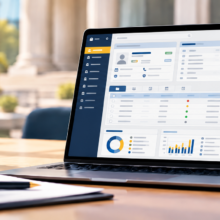
This philosophy is also guiding the development of RiteTrack Assistant, an AI-enabled add-on within RiteTrack.
RiteTrack Assistant is designed to bring AI assistance into the environment where RiteTrack users are already working. It can interact with RiteTrack data while also providing general AI assistance.
Some of its capabilities include helping users summarize case notes, identify dashboard tiles that may be useful based on their data, and suggest reports that could help them better understand the information available within RiteTrack.
When a user has a RiteTrack-specific question that the Assistant cannot resolve, that question can also be escalated to the customer’s project manager.
The objective is not to have AI take over the work happening within RiteTrack. It is to make it easier for users to interact with the information, tools, and resources already available to them.
Keeping People at the Center
There is enormous potential for AI in case management, but usefulness should be measured by more than how impressive the technology appears.
For programs working directly with people, families, communities, and sensitive information, successful technology has to respect the environment in which it operates.
AI can summarize information.
It can help users navigate data.
It can surface options they may not have considered.
It can make certain tasks faster or easier.
But the people using the system still provide something AI cannot: professional experience, relationships, cultural understanding, judgment, and knowledge of the individuals and communities they serve.
The most valuable role for AI in case management may therefore be a supporting one.
Not replacing the work.
Helping people make better use of the information behind it.